The Expats’ Guide to German Tax ID and Social Security Number

Navigating German Bureaucracy as an Expat
Understanding the Tax Identification Number (Steuer-ID) and the Social Security Number (Sozialversicherungsnummer)Introduction
Moving to Germany is an exciting adventure. The country offers a strong economy, world-renowned cultural life, excellent public services, and a well-organized legal system. Yet, for all its strengths, one of the challenges newcomers often face is navigating the bureaucracy that underpins everyday life. As an expatriate, you will quickly learn that official documents, forms, and numbers are part of the German experience. Two of the most important identifiers you will encounter early in your stay are:- The Tax Identification Number (Steueridentifikationsnummer or Steuer-ID)
- The Social Security Number (Sozialversicherungsnummer)
The Tax Identification Number (Steuer-ID)
Purpose
The Steuer-ID is primarily about taxation. It is a lifelong identifier assigned to you as an individual to track your tax-related activities throughout your time in Germany.How You Get It
- Issued automatically when you complete your residence registration (Anmeldung) at the Bürgeramt.
- Sent by post from the Federal Central Tax Office (Bundeszentralamt für Steuern).
- Arrives within 2–4 weeks.
Characteristics
- 11-digit number (numeric only).
- Permanent—does not change if you move within Germany.
- Needed for:
- Employment (to calculate and remit correct tax).
- Annual tax return (Einkommensteuererklärung).
- Receiving social benefits or allowances.
Important Tip
If it does not arrive within a month, you can request it online from the tax office. Without it, your employer must deduct the maximum tax rate.The Social Security Number (Sozialversicherungsnummer)
Purpose
The Sozialversicherungsnummer ties you to the German social security system, particularly the pension insurance system (Deutsche Rentenversicherung). It ensures your contributions are recorded correctly so you can access:- Pension benefits
- Unemployment benefits
- Health and sickness benefits
Example Document
Below is an example of a German Social Security Number Certificate (Versicherungsnummernnachweis):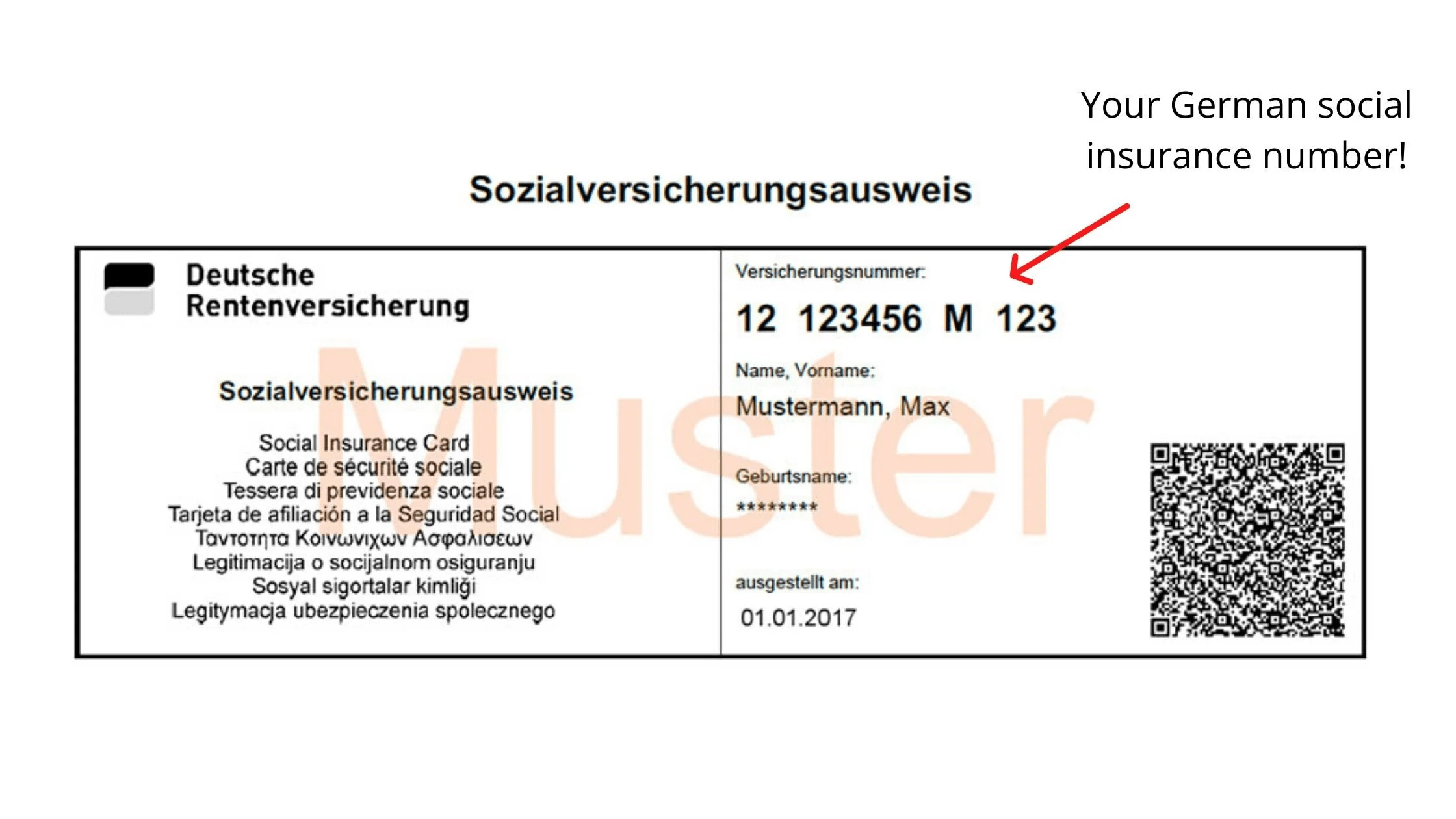
How You Get It
- Generated automatically when you start your first job and select a statutory health insurance provider (e.g., TK, AOK, Barmer).
- Your health insurer requests it from Deutsche Rentenversicherung.
- Sent to you by post.
Characteristics
- 12-character alphanumeric code (contains parts of your date of birth and internal codes).
- Permanent—does not change if you change jobs.
- Essential for reporting contributions to health, pension, and unemployment insurance.
Common Confusion Between Steuer-ID and Sozialversicherungsnummer
Many newcomers confuse these numbers because:- Both arrive by post.
- Both are required for employment.
- Both are official identifiers.
- Steuer-ID = Taxes
- Sozialversicherungsnummer = Social Security Contributions
Troubleshooting Delays
- Missing Steuer-ID → Contact Bundeszentralamt für Steuern online or by mail.
- Missing Sozialversicherungsnummer → Contact your statutory health insurance provider first.
Practical Tips for Expats
- Treat these numbers like your passport—keep the letters safe.
- Store them in a secure place (password manager, locked file, etc.).
- Both are lifelong identifiers:
- Steuer-ID does not change, even if you move.
- Sozialversicherungsnummer remains the same across jobs.
- Don’t confuse the Steuer-ID with the Steuernummer, which is issued separately to freelancers or businesses.
- Steuer-ID → Ensures correct taxation.
- Sozialversicherungsnummer → Ensures social contributions are tracked.